Youth Without God
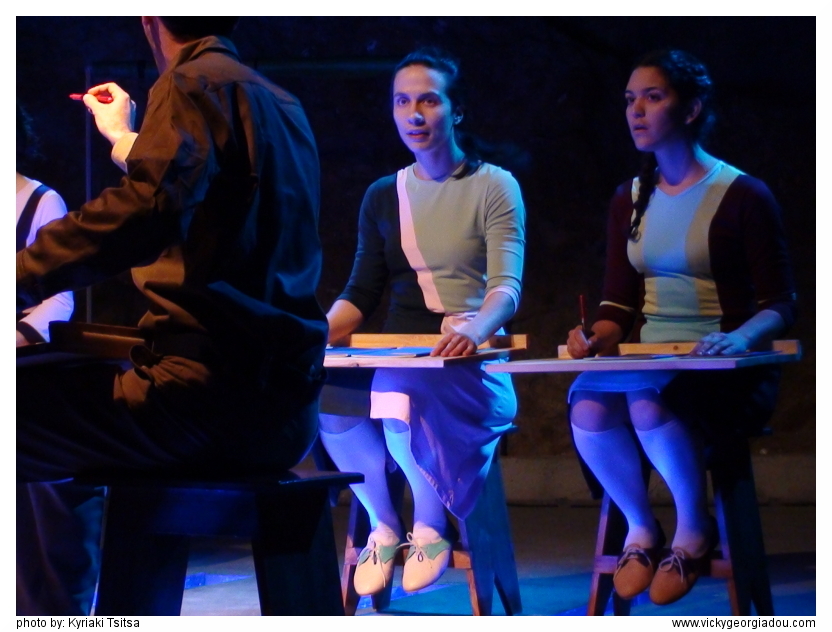
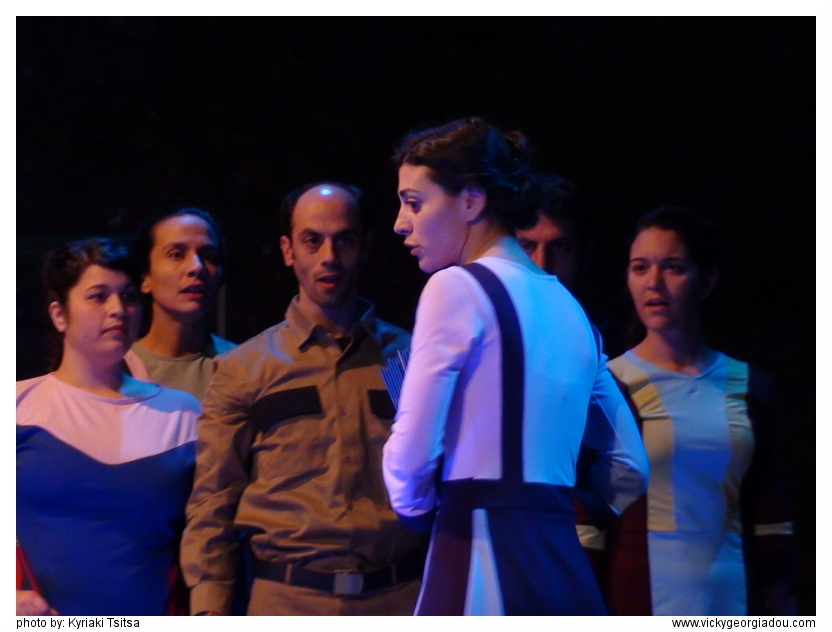
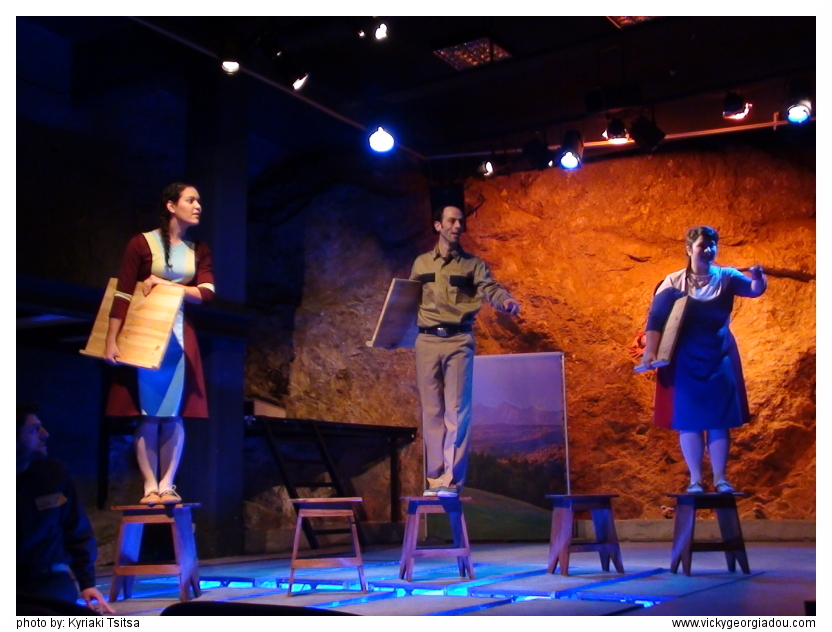
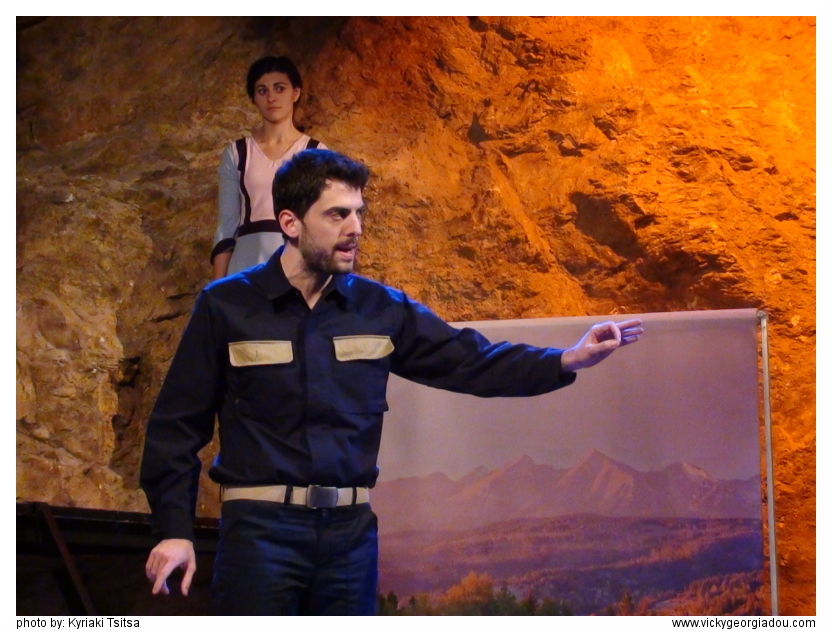
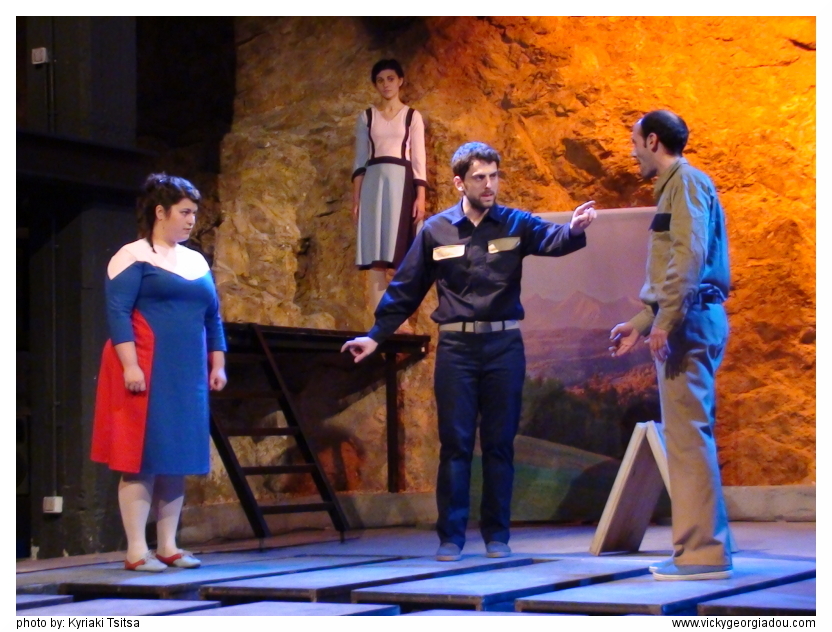
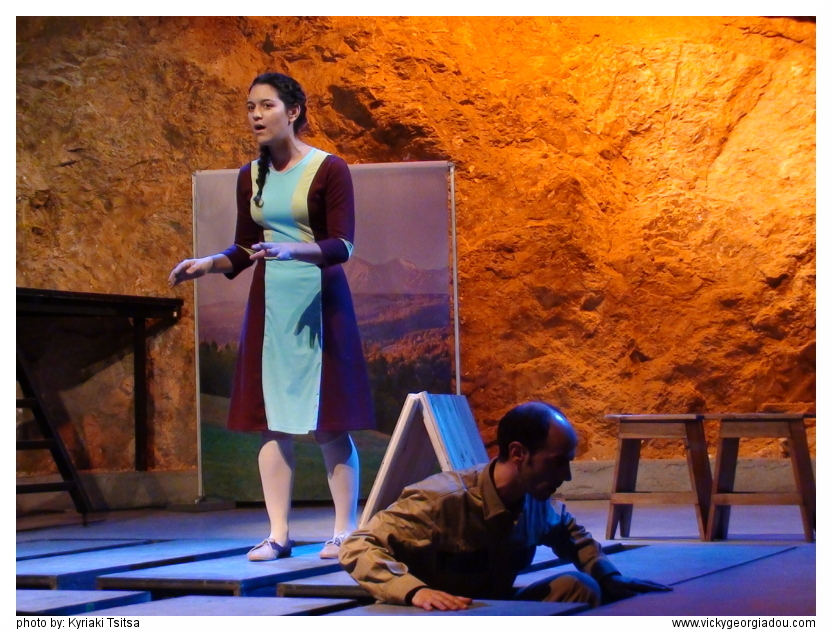
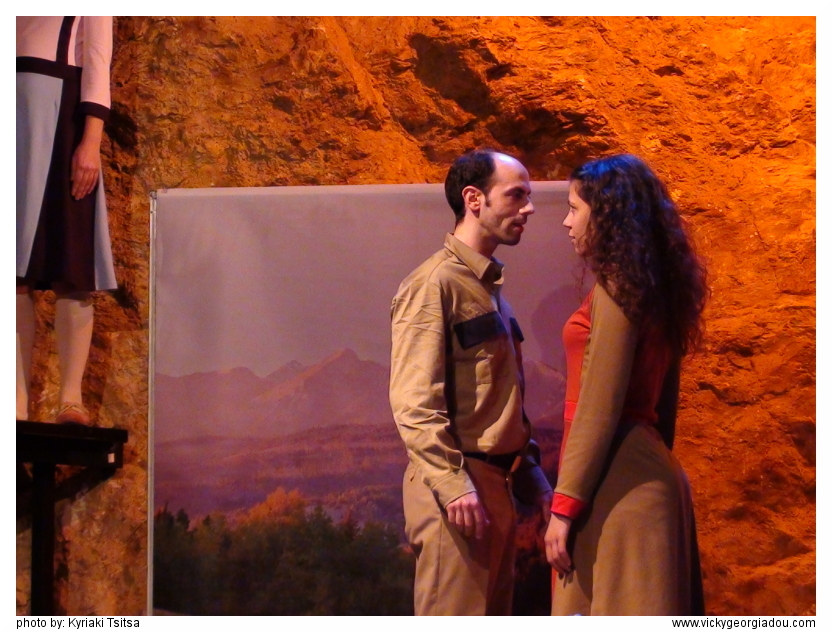
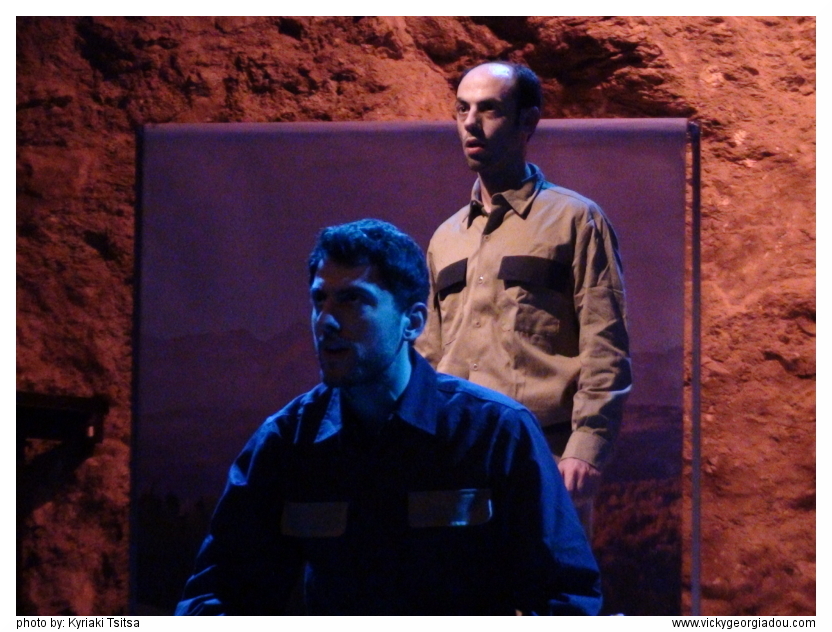
The work Youth Without God, by Ödön von Horváth, was presented by Pulsar group at Skrow Theater, in Athens, from 5 February until 10 April 2014.
Translation: Vicky Georgiadou, Foibi Psevdou
Director, dramaturgy: Vicky Georgiadou
Set/costume design: Kyriaki Tsitsa
Lighting designer: Melina Mascha
Music and sound design: Costas Andreou
Cast: Athanasia Agoraki, Pantelis Flatsousis, Yiouli Karnachoriti, Foivos Simeonidis, Danai Tikou, Voula Verdeli, Genovefa Zagga
The lost compass of a generation that finds its orientation
Ödön von Horváth’s plays fiercly criticized the malevolent petit bourgeois and the megalomaniac loser, their stupidity and their arrogance. He expressed ruthless criticism to the cornerstones of the fascist regime in Germany during the ’30s. That was the reason that gradually – from 1933 until 1936 – Hitler’s regime banned the presentation of his plays, hushing and wiping the voice that exposed the ridiculous and dangerous character of its practices.
Necessarily dumb as a fish and having lived himself a youth that denounced God, because it couldn’t understand how God tolerated world war’s horrors, Ödön von Horváth will write in 1937 his Youth Without God. A novel for theatre, one would say.
In Youth Without God, Horváth conceives – as an amateur astrologer – the dark vision of the Age of Fish. The cold era during which “human soul will become motionless like the face of the fish” and the world will suffer a plague that “will infect human souls which will die. Human souls will die but humans will keep living.”
However in this novel, which meant to become Horváth’s literary will, since it was the last work he managed to complete before he died, Horváth expresses his last wish: the unconditional pursuit of the truth, even when this pursuit has to take place within seas dominated by darkness, silence, crime and lie.
Against all odds, the youth becomes the medium for finding this truth, the students of a school in the Age of Fish. Although these students are youth without God, youth without truth, although they are described as impersonal letters, although most of them seem to be cold, blank, arrogant and ruthless, although most of them speak like propaganda radio and use sarcasm and violence as their weapons. However, not all of them are like that.
At a certain point in the course of the story of Youth Without God, a compass is lost. However Horváth smiles and proves us that a generation which is supposed to be lost is not altogether disorientated. Some of these students, silent and unnoticed, hear the teacher, who – against the secret orders of the state – once dares to teach how things should be. And these students begin to dream. Begin to fight “for truth and justice” and the seed of their truth grows in the fields of lies.
Also, in the course of the story of Youth Without God, it often rains. Either, you would think, because this way the world becomes more suitable for the cold fishes that have to swim or because “an even more beautiful biblical flood is coming” to destroy everything that need to be destroyed in the world. But the flood does not occur in the end, because truth speaks. And it could not occur anyway, because there is no God with sly and cruel eyes and everything that needs to be done for the world’s improvement will be done by humans who dare to speak the truth. “For God is the truth”.
Horváth’s hope is not that overt, because he knows the world in which he lives. But it does exist and has a voice and a smile.